Stanley Park Cherry Blossoms 2026: Real‑Time Drive & Best Blossom Spots in Vancouver’s Iconic Park
Quick answer — are Stanley Park’s cherry blossoms worth it in 2026?
If you’re coming to Vancouver for cherry blossoms in 2026, Stanley Park is still an easy yes. Most years the trees here start to wake up in early March and hang on into early May, with the real peak usually somewhere around late March and the first part of April according to this year’s Cherry Blossom Festival dates and tourism updates. This spring has followed that pattern again: blossoms started popping at the beginning of March and, by early April, a lot of neighbourhoods are at or near their best, with plenty of colour still showing in Stanley Park and along the downtown waterfront.
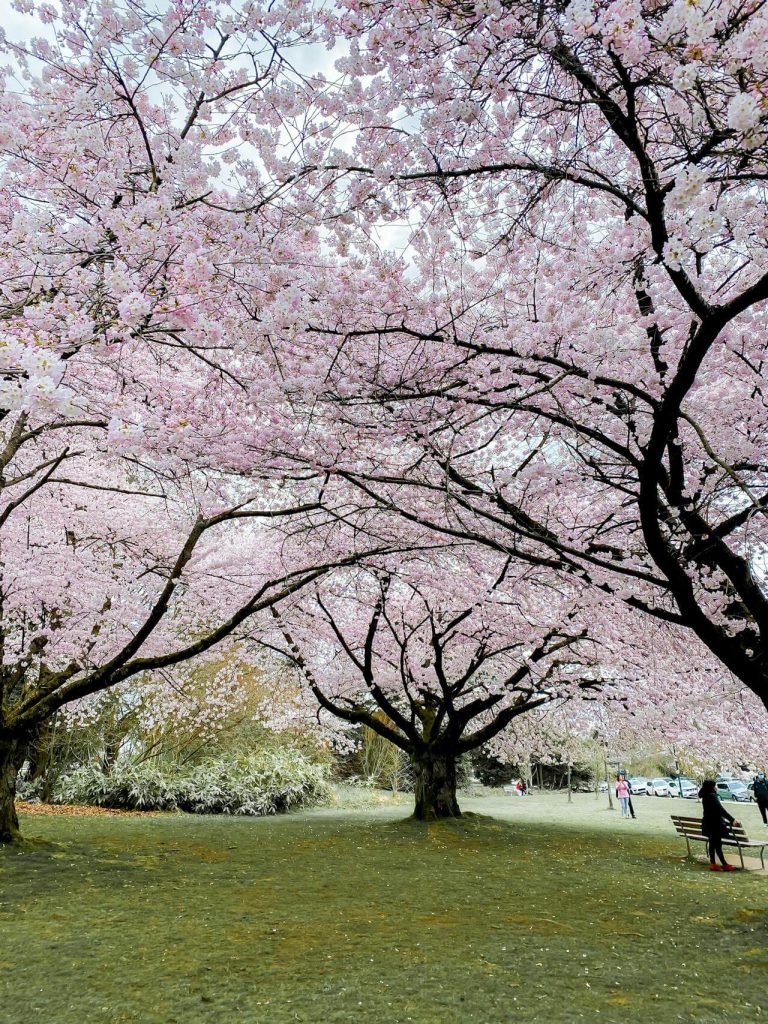
City and tourism sources estimate there are now well over 40,000 cherry trees planted across Vancouver, but Stanley Park is one of the few places where you can see several different blossom “scenes” in a single, simple loop—the Rose Garden, the trees around the Japanese Canadian War Memorial, the tunnel effect near Lost Lagoon, and stretches of Stanley Park Drive and the seawall where branches frame the harbour and skyline. If you only have time for one straightforward spot that combines blossoms with water, mountains and city views, and that you can cover by car, bike or on foot without much planning, Stanley Park is still one of the best one‑stop options in the city for cherry‑blossom season this year.
Why Stanley Park is the classic Vancouver cherry blossom spot
If you only have time for one place to see cherry blossoms in Vancouver, I’d start with Stanley Park. It packs a lot into a small area: big old trees, views of the water and mountains, and an easy loop you can drive, bike, or walk without needing to think too hard about navigation. Even in a slightly off year, you almost always get at least a few stretches in the park that feel like a proper wow moment.
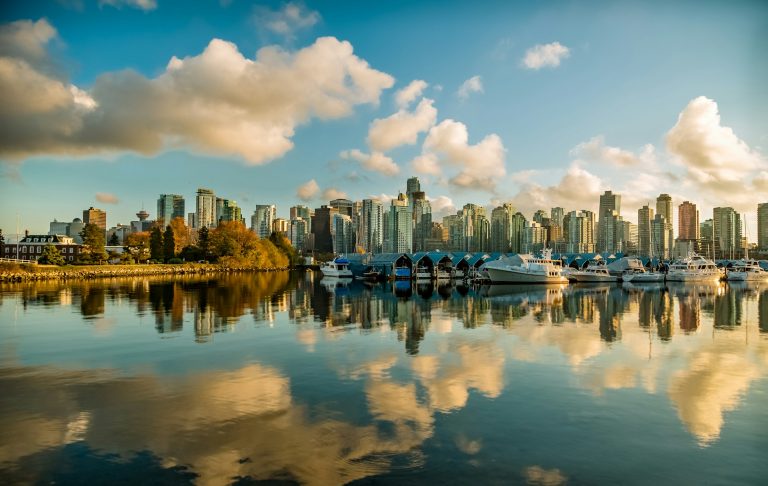
Inside the park, there are a few spots I’d put at the top of your list. The Rose Garden is the obvious first stop, with rows of cherry trees lining the paths beside the formal beds and the old pavilion building. A couple of minutes away, the trees around the Japanese Canadian War Memorial usually put on one of the best shows in late March and early April, with thick clusters of blossoms on both sides of the path. If you follow the trail along the eastern side of Lost Lagoon, you get that classic “tunnel” feel where branches reach over your head and you’re walking under a ceiling of pink. And as you follow Stanley Park Drive and parts of the seawall, you’ll find smaller clusters of cherry trees that frame Coal Harbour and the downtown skyline, which is where a lot of those Vancouver in bloom photos are really taken.
Watch the real‑time Stanley Park cherry blossom drive
If you’d rather see the blossoms before you commit to a route, this real‑time drive is the easiest way to get your bearings. It’s a full loop around Stanley Park filmed during the 2026 cherry‑blossom season, so what you’re seeing on screen is exactly what the trees and the light look like from a driver’s perspective right now—not a highlight reel from ten different years. This video can become a planning tool too: you can decide whether to drive the full loop, park and walk sections of it, or come back at a specific time of day to chase the same light you see in the footage.
Turn‑by‑turn cherry blossom loop for drivers and cyclists
Simple driving route around the park
If you’re driving, the easiest way to do a “greatest hits” blossom loop is to start where West Georgia Street runs straight into Stanley Park at the main entrance. As you pass under the stone gate, stay on the main road and follow the signs toward the Stanley Park Pavilion and Rose Garden; this brings you right past one of the park’s densest clusters of cherry trees, with rows lining the paths beside the formal beds and lawn. Current 2026 blossom maps and guides still point to this Rose Garden and pavilion area as one of the most reliable viewing spots in the park during peak season, because the trees here tend to bloom strongly and are easy to reach from the main road.
From there, keep following the internal roads toward the Japanese Canadian War Memorial, which sits just off Pipeline Road. This stretch usually hits its stride in late March and early April and is known for trees flanking both sides of the approach to the monument, so you get a short but very “postcard” section even if you don’t get out of the car. Once you’ve passed the memorial, continue looping back toward Lost Lagoon and the park entrance. As you skirt the eastern edge of the lagoon, look for the sections where the branches lean over the path and water—2026 cherry‑blossom location round‑ups repeatedly flag this side of Lost Lagoon as the place to go for that classic “tunnel” or canopy effect when the Akebono trees are at their peak. Running this as a simple loop—Georgia entrance → Rose Garden/Pavilion → War Memorial → Lost Lagoon → back to Georgia—lets you hit the same prime blossom zones that most 2026 lists mention, without having to piece together separate stops.
Doing the same loop by bike or on foot
On a bike or on foot, you can follow the same rough circuit, just slower and with more chances to duck onto side paths. Stanley Park is set up for this: there’s a one‑way bike lane around the park, plenty of shared‑use and walking paths in the interior, and clear signs pointing you toward the Rose Garden, Pavilion, War Memorial and Lost Lagoon, which is why a lot of 2026 cherry‑blossom advice specifically recommends the park to cyclists and walkers. A simple version is to start near the Denman/Georgia entrance, where you’ll find pay parking and several bike‑rental shops, head up to the Rose Garden first, cut across to the War Memorial, and then drop down toward the eastern side of Lost Lagoon before looping back out to Georgia Street.
At a relaxed pace with photo stops, that’s roughly a one‑to‑two‑hour walk, or 30–60 minutes on a bike if you don’t rush but don’t linger too long at each stop. You don’t need a turn‑by‑turn map open the whole time; you’re essentially moving from one obvious landmark to the next, and those landmarks line up with the same blossom pockets that this year’s festival maps and local guides highlight for Stanley Park.
When to go — best timing and light in 2026
Peak bloom window and late‑season chances
Vancouver’s cherry‑blossom season is more of a stretch than a single weekend. Most years, trees start to open in late February or early March and you can find blossoms into late April or even early May in cooler pockets. For 2026, the Vancouver Cherry Blossom Festival schedule and several local blossom guides all point to a main peak from roughly the last week of March into the first half of April, and this year’s “Blooming Now” updates confirm that timing, with full bloom reported across much of the city at the end of March.
According to those same sources, spots like the Stanley Park Rose Garden, the Japanese Canadian War Memorial area and the “tunnel” section on the eastern edge of Lost Lagoon have been at or near peak around March 30 this year. Meanwhile, some groves closer to the water—such as Devonian Harbour Park at the edge of Stanley Park and Cherry Grove along the Coal Harbour seawall—often hold their blossoms a little longer, so even early‑ to mid‑April visits can still catch good colour there.
Best time of day for photos and video
Light makes a huge difference to how the blossoms look on camera. Photographers who specialize in cherry blossoms generally recommend avoiding harsh midday sun when you can, because it tends to wash out the pinks and create hard shadows, and instead aiming for softer light—overcast skies, early morning, or the golden hour just after sunrise or before sunset. Overcast days are actually ideal in Vancouver: the clouds act like a giant softbox, so the petals look richer and you don’t have to fight deep contrast between bright blossoms and dark branches. If you’re planning photos or video, early morning gives you quiet paths and clean frames, while late afternoon into early evening gives you that warm, low light that makes the trees glow a bit against the water and skyline. In practical terms, think “first hour after sunrise” or “last hour before sunset” as your best windows. The 360 video above was shot in this ideal sunset hour, which gives the entire park a golden glow.
How Stanley Park fits into a bigger Vancouver blossom day
Combine the loop with downtown and QE Park
If you want to turn Stanley Park into part of a bigger blossom day, the easiest option is to layer it onto places you’re probably visiting anyway. One simple route is to start downtown: wander through the blossoms around Burrard Station and Art Phillips Park, then walk or drive down to Coal Harbour, where you’ll often find cherry trees along the seawall and in Devonian Harbour Park at the entrance to Stanley Park. Current 2026 blossom maps and tourism posts highlight Devonian Harbour as a reliable late‑season spot, so it’s a natural warm‑up before you drive or bike the Stanley Park loop.
Morning and evening itinerary
Another straightforward plan is to do Queen Elizabeth Park in the morning and Stanley Park in the afternoon. QE Park is one of the top‑ranked cherry‑blossom locations this year, especially around the Cambie and West 33rd entrance, the duck pond and the Quarry Garden, and several 2026 guides point to nearby residential streets around West 38th–40th Avenue for classic canopy shots. Once you’ve had your fill of blossoms and views over the city from QE, you can head back down toward the water and finish the day with the quieter, cooler light around Stanley Park and the seawall.
Other can’t‑miss spots in 2026
If you’re building a longer itinerary, these are the names that keep coming up in 2026 cherry‑blossom guides and festival content:
- Queen Elizabeth Park: Trees around the Cambie & West 33rd entrance, the duck pond and the Quarry Garden are all being highlighted this year as prime viewing spots, and you get big views over downtown on top of the blossoms.
- Burrard Station / Art Phillips Park: The cluster of trees around Burrard SkyTrain and the small park across the street shows up again and again in “best photo spots” lists, partly because it’s so easy to reach on transit.
- David Lam Park and the Yaletown seawall: The park and the stretch of seawall through Yaletown are featured in 2026 festival write‑ups and photo round‑ups as a reliable downtown‑south blossom zone, with plenty of photos from late March showing it in full bloom.
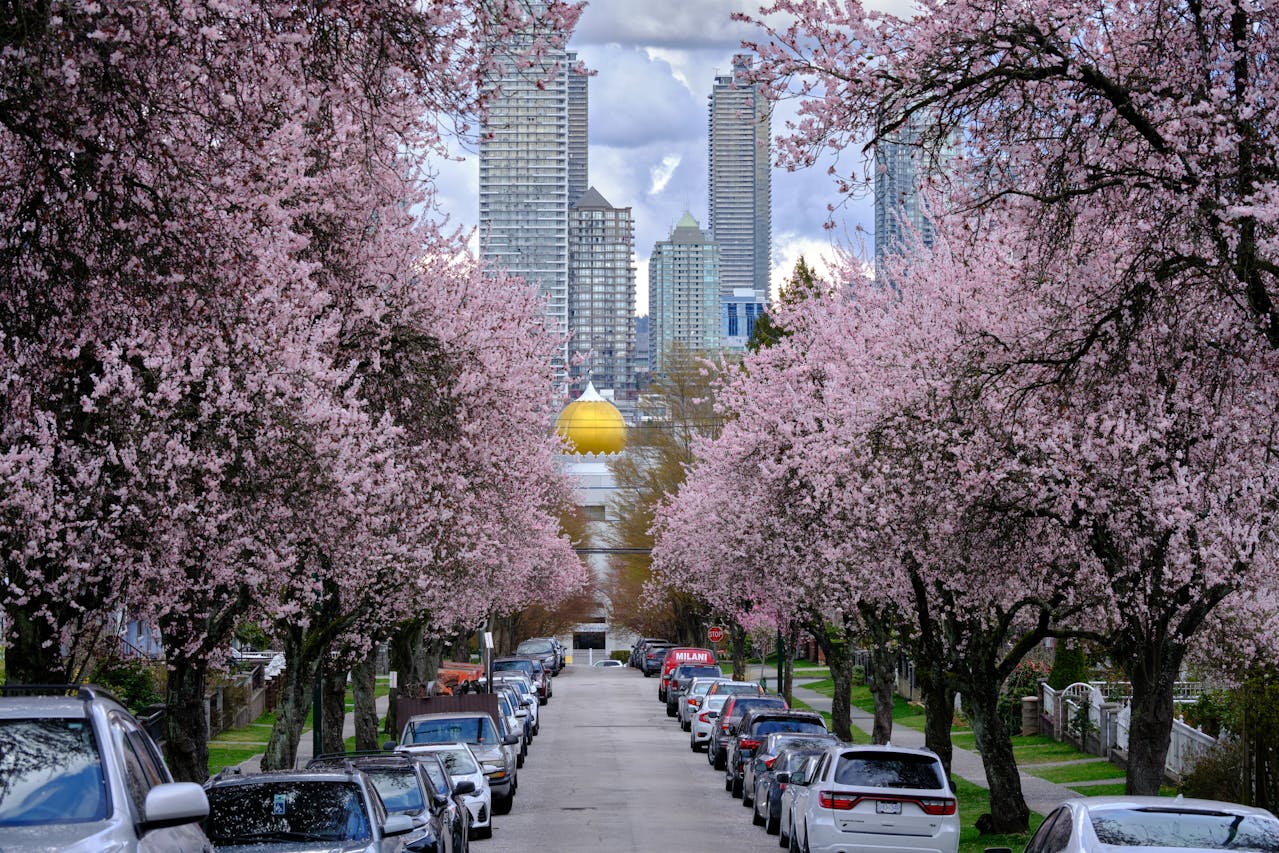
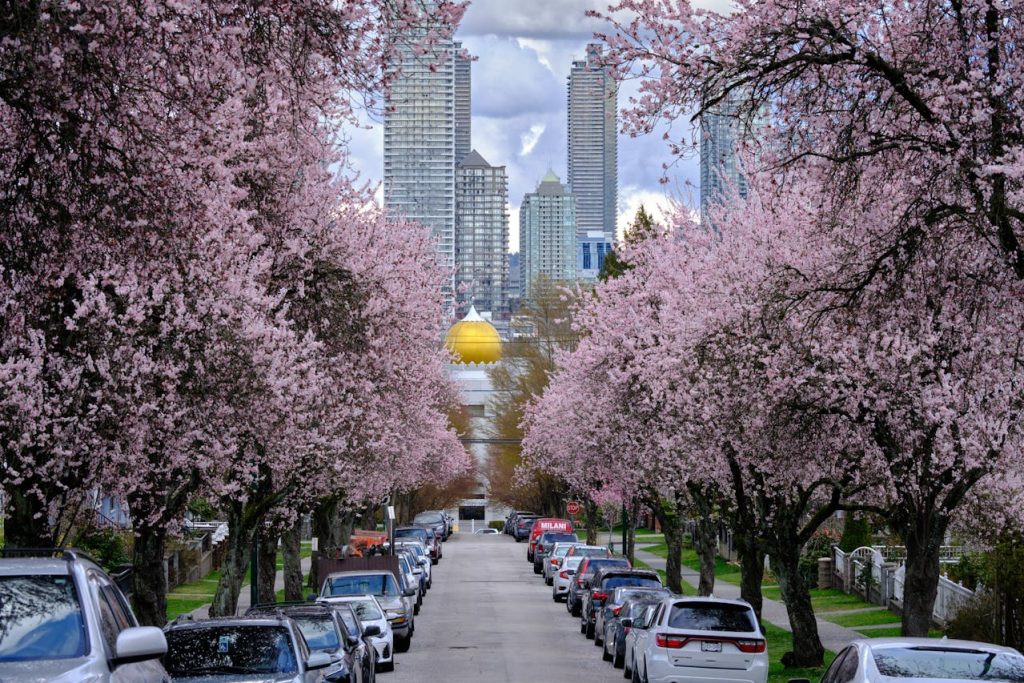
- Graveley Street and other residential “tunnel” streets: East Vancouver streets like Graveley, along with a handful of mapped canopy streets on this year’s cherry‑blossom maps, are the places to go if you specifically want that full tunnel effect where branches meet over the road.
For exact cross‑streets, up‑to‑the‑day bloom status, and more residential options, it’s worth checking the official Vancouver Cherry Blossom Festival “Blooming Now” map or one of the big 2026 blossom round‑ups.
Practical tips for enjoying cherry blossoms in Stanley Park (without being “that” tourist)
The blossoms are beautiful, but the way people behave around them has become a real issue in Metro Vancouver this year. In late March 2026, RCMP and city officials went public with warnings about cherry‑blossom visitors blocking roads, stopping in live traffic lanes, and parking illegally near popular viewing spots in Richmond and other parts of the region; one enforcement blitz near a well‑known park by the airport resulted in dozens of tickets and multiple cars being towed in a single day, after drivers stopped in travel lanes just to take photos. Local news coverage also highlighted residents’ complaints about crowds trampling lawns and blocking driveways in residential streets lined with cherry trees. At the same time, the Vancouver Cherry Blossom Festival and a UBC botanist have been reminding people that walking over roots, climbing trees or shaking branches to make petals fall can seriously damage the trees and shorten the bloom, even if it looks “harmless” in a quick video clip.
In Stanley Park, the same basic etiquette applies, and it’s not hard to follow. Stick to the paved paths and obvious grass areas instead of stepping into planted beds or onto exposed roots just to get a slightly different angle. Skip the branch‑shaking entirely—if you want falling petals, wait for a breeze rather than forcing it. If you wander into nearby residential streets to chase blossom tunnels, remember people actually live there: don’t block driveways, double‑park, or stand in the middle of the road without checking for traffic, and try to keep the noise down if you’re out early or late. A simple gut check helps: if you’d be annoyed at someone doing it outside your own place, avoid doing it here. You’ll still come home with the photos you want, and the trees—and the neighbours—will be in better shape for everyone who comes after you.
]